Mechanical recycling
Sorted plastic goes back out as plastic. There is no diesel reward. River plastic is a poor feed for that route as well, because of mud, salt, and mixed litter.
The conversion
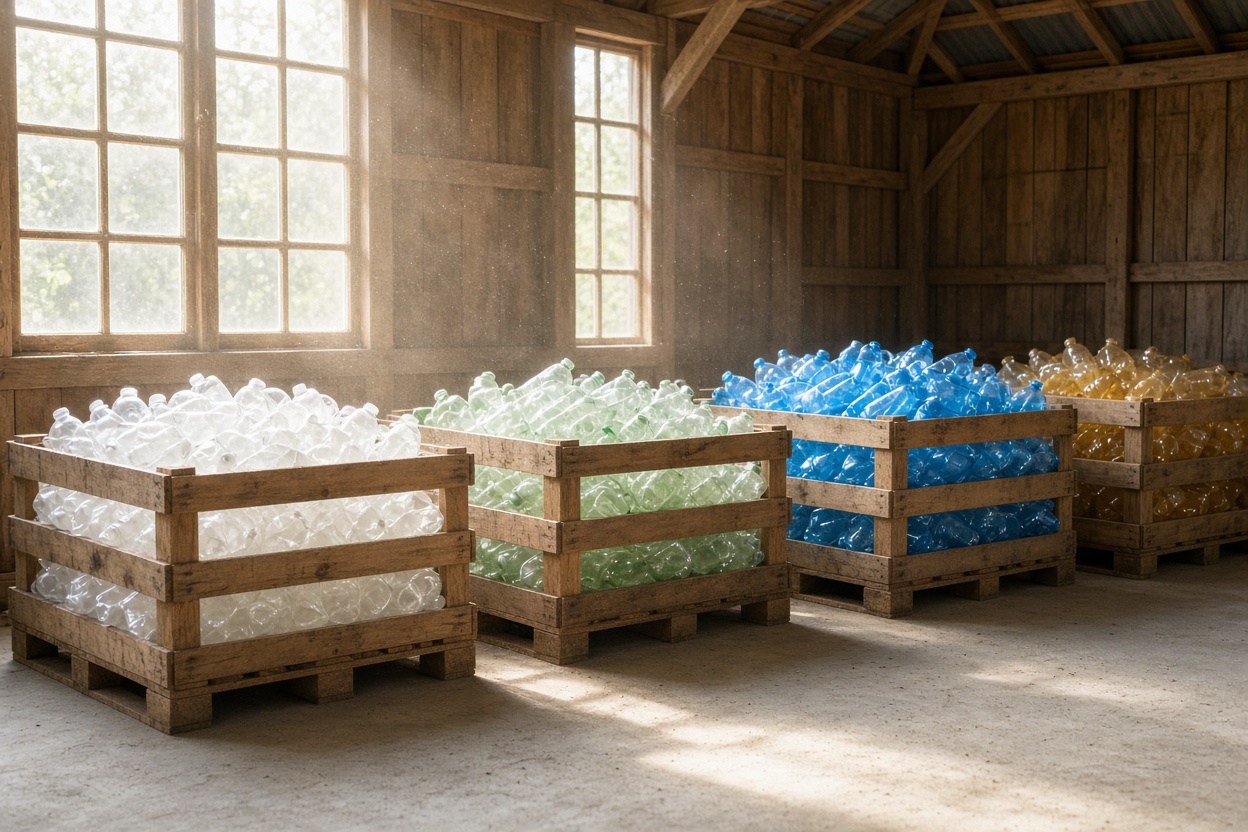
Illustration, not a PyroLife site. No yield is published.
PyroLife pays people in diesel for plastic they bring. The conversion that can produce that liquid, in one thermal step, is pyrolysis. Mechanical recycling returns plastic as plastic. Burning returns heat. A gasification plant can aim at a liquid only after a second synthesis. Pyrolysis is the step that already names a liquid among its outputs. That liquid is the candidate for the reward. It is not road diesel until a laboratory and an authority accept the batch.
This is a choice of route for a local reward. It is not a permit, a plant design, or a measured result. No PyroLife machine is sited. No litres per kilo are published. This page gives no temperatures, pressures, catalysts, residence times, or feed recipes.
The U.S. Environmental Protection Agency describes pyrolysis as a thermal conversion aimed mainly at common packaging plastics such as polyethylene and polypropylene. The named outputs are a liquid, called pyrolysis oil, hydrocarbon gases, and a solid char. EPA distinguishes that route from burning mixed municipal waste to make electricity. Pilot and early commercial plants exist. That is not evidence of a licensed container for a river community.
A 2021 review of chemical recycling (Dogu and colleagues, Progress in Energy and Combustion Science) treats pyrolysis and gasification as the thermal routes, and treats real plastic waste as variable. Mixed polymers, additives, and dirt change from load to load. A 2022 review of post-consumer pyrolysis oils (Kusenberg and colleagues, Waste Management) finds chlorine and metals far above the limits used for an industrial feedstock. The oils meet those limits only after further upgrading, and only if the waste is pretreated. The liquid is an intermediate.
Sorted plastic goes back out as plastic. There is no diesel reward. River plastic is a poor feed for that route as well, because of mud, salt, and mixed litter.
Direct burning of mixed waste can make heat or electricity. It does not hand a liquid back to the person who brought the plastic. Open burning is not this project.
Gasification makes a gas. A diesel-range liquid from that gas needs a further synthesis. Public reviews treat that as a larger plant, not the first container.
Solvolysis and related routes aim at monomers for new plastic. They are a materials route. They are not a fuel reward.
One thermal step yields a liquid, a gas, and a char. The liquid is what a diesel reward would be drawn from, after upgrading and an approval that do not exist yet.
Chlorinated plastics such as PVC, and loads that are too dirty, can be turned away. A refused load earns no diesel. Char, off-spec liquid, and filters are wastes and are hauled away.
In Europe, automotive diesel placed on the market is specified by EN 590 and by the Fuel Quality Directive. ASTM D975 names grades of diesel fuel. Pyrolysis oil is not one of those grades. Under the EU Waste Framework Directive, recycling excludes reprocessing into materials that will be used as fuels. A diesel reward is not, on that definition, recycled plastic. Making a liquid does not by itself end waste status.
The operator would keep a share of the liquid to run the machine. That share is plant use. It is not evidence that the rest meets a fuel rule, and it is not evidence that anything is left for the people who brought the plastic.
The concept page states the maturity: the idea and the use are described. A PyroLife lab test and a prototype are not. The library holds the longer public record.